
Review · WORKSHOPS
One Day Ski Touring Workshop
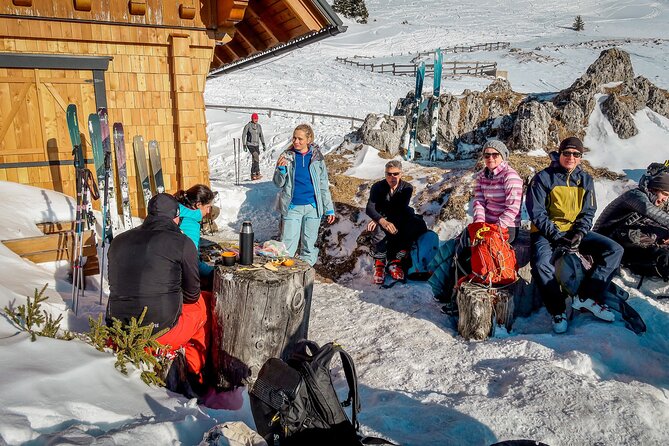
Ski touring skills, taught with real safety drills. This one-day workshop runs in the Bled region, with a classroom start at Kofler sport in Mojstrana and then hands-on practice on snow in the Karawanks or Julian Alps. I like that you get structured ski touring basics early, not just random trail time.
Two things I really like. First, the safety training is built into the day, not tacked on: you work with avalanche rescue equipment and practice the right procedures after an accident, including search steps and mountain rescue involvement. Second, the group stays small (max 6), so the guide can give specific corrections during ascent and descent, and you come away with resources for safer planning.
One consideration before you book: this is weather dependent, and winter conditions can force a change of location or plan. Also, food and drinks are not included, so you will want to plan around that.
In This Review
- Key highlights I’d target
- From Bled to the training classroom in Mojstrana
- The workshop structure: safety theory plus snow reality
- Your full rental kit: what’s included and why it matters
- Climbing and turning: techniques you can apply immediately
- Avalanche rescue basics, taught like you’ll actually need them
- Where you train: Karawanks, Jesenice, and Pokljuka terrain choices
- Small group coaching, English instruction, and practical attention
- Price and logistics: what your $366.71 buys
- Who should book this one-day ski touring workshop
- Should you book? My take for the Bled area
- FAQ
- What language is the workshop taught in?
- Where does the day start, and is pickup available?
- How big is the group?
- What ski touring and safety equipment is included in the price?
- Is food and drinks included?
- What happens if the weather is poor?
Key highlights I’d target
- Theory first at Kofler sport in Mojstrana, then immediate practice in the field
- Avalanche rescue drills with beacon search, probing, and shovel use
- Snowpack stability training using snow layers and stability tests
- Full rental kit included, from skins and crampons to boots and poles
- Pickup and transport support, with travel from Mojstrana up to 200 km
From Bled to the training classroom in Mojstrana
Even though the workshop is centered around the Bled area, your day starts in Mojstrana at Savska cesta 1, at the Kofler sport premises for the theory part. That matters more than you might think. When safety and decision-making are part of the curriculum, you want a calm start where you can absorb the why behind the how.
The flow of the day is simple and practical. You begin with instruction indoors, then you shift to the snow for field work in a suitable training area. Locations are chosen from the Karawanks zone (Upper Sava Valley, above Jesenice) or the Julian Alps area around Pokljuka, with more Upper Sava Valley options depending on conditions. That flexibility is the reality of winter. Good training means the instructor can match the terrain and snow quality to the lesson goals.
There’s also a real convenience factor baked in. Pickup is offered if you choose it, using a van from the agency with a logo on it. If you prefer to meet directly, you meet in front of the agency where the name is on the doors. And after the day ends, it comes back to the meeting point.
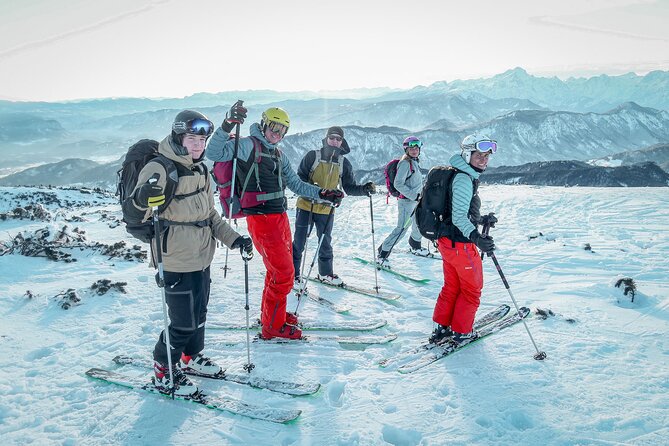
Group size stays capped at 6 travelers. In ski touring, where small technique changes can make a big difference on the skin track or on turns, that kind of ratio helps. You get more time with the guide and fewer long stretches where you are left figuring things out alone.
More Day Trips in Bled
- From Ljubljana: Day Trip to Bled and Vintgar Gorge
★ 4.8 · 166 reviews - Day Trip in Triglav National Park from Bled
★ 5.0 · 130 reviews - Ljubljana: Lake Bled & Triglav National Park Full-Day Trip
★ 4.8 · 114 reviews
The workshop structure: safety theory plus snow reality
This isn’t marketed like a general tourism outing. It’s a focused skill workshop that treats ski touring as a winter mountain responsibility, not a casual hobby.
The day includes a set curriculum that you can connect to real-world decisions:
- Equipment for ski touring
- Avalanche rescue equipment and procedures
- Technique and tactics for ascent and descent
- Winter mountain dangers and how to think about them
- Snowpack basics: cross section of snow cover and snow base types
- Snowpack stability tests
- What to do after an accident: search with avalanche beacons, probes, and mountain rescue service
That list is the backbone of why the course feels useful instead of just fun. Avalanche awareness often stays abstract in casual lessons. Here, you are taught the steps and the tools, then you practice the concepts in the field part of the day. And by including snowpack stability testing, the workshop nudges you toward safer planning habits for future tours.
In plain terms, you are learning two skill sets at once. One is the physical craft: moving uphill and managing controlled descents. The other is the mental craft: understanding snow conditions and using structured safety procedures if something goes wrong.
The best part is the sequencing. You start with theory, then you apply it on snow. That helps your brain link the gear and the procedures to what you actually see outside. And when the plan changes last-minute due to conditions, you do not feel like you lost the lesson. You still have the framework to keep training in a meaningful way.
Your full rental kit: what’s included and why it matters
A ski touring workshop is only as good as the equipment reality behind it. This one includes rental of the essential gear, including the key safety items. Specifically, you get:
- Avalanche kit: beacon, probe, shovel
- Skis, skins, boots, poles
- Ski crampons
This is a big value point for your day. If you were renting only the touring setup and then trying to source avalanche rescue gear elsewhere, the training would get messy fast. Here, you train with what you need, using the same tools you will think about during rescue scenarios.
It also lowers the barrier to entry. You can show up with the intention to learn, without having to already own the whole ski touring system. That helps if you are deciding whether ski touring is your future sport. You get a realistic feel for how the kit works together: skins for ascent traction, crampons for specific snow/terrain needs, and the overall flow of climbing plus turning.
One more detail that helps learning: rental equipment means everyone is on comparable gear. The guide can focus corrections on technique and decisions rather than constantly troubleshooting mismatched equipment.
And yes, there is a gift included too. Small, sure, but it signals the operator is thinking about the whole day as a package, not a barebones lesson.
Climbing and turning: techniques you can apply immediately
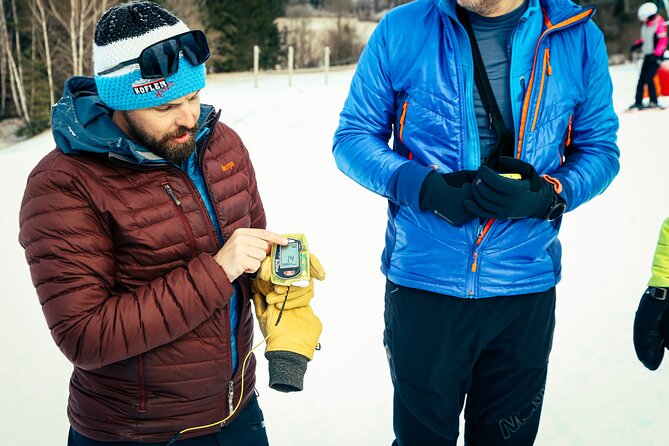
On-snow training is where most people either click with ski touring or struggle. This workshop focuses on the fundamentals you need for confident climbs and turns in winter conditions.
You’ll work on:
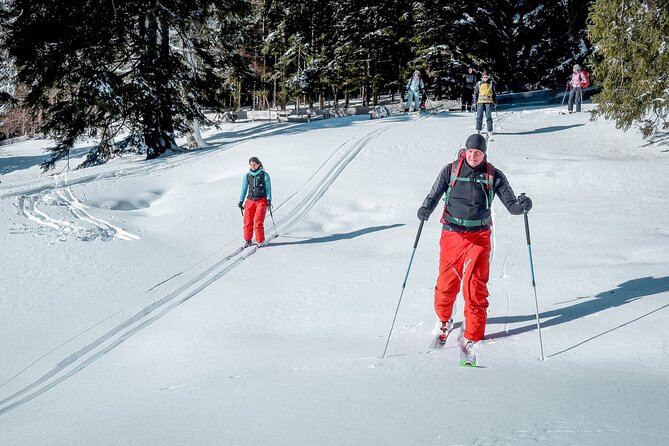
- Ascent technique and tactics
- Descent technique and tactics
- Adapting to different conditions and terrain
Because the workshop includes both technique and tactics, you are not just being taught body movement. You are taught the decision logic around movement. That is what separates a controlled tour from a stressed one. When you understand tactics, you stop treating uphill travel and downhill skiing like two separate sports. You start linking them as part of the same trip.
Snowpack stability training also connects to the technique coaching. When you understand how snow layers behave, you can better anticipate risk. Even if you do not become an avalanche expert after a single day, the workshop pushes you toward safer habits through structured learning: how to think, what to test, and what procedures matter.
And since the group stays small, you should expect coaching that targets individual needs. This is the kind of course where a guide can notice your pacing on the climb, your turn shape on descent, or how you manage control at low speed. The extra attention shows up in practical corrections, not just general encouragement.
Avalanche rescue basics, taught like you’ll actually need them
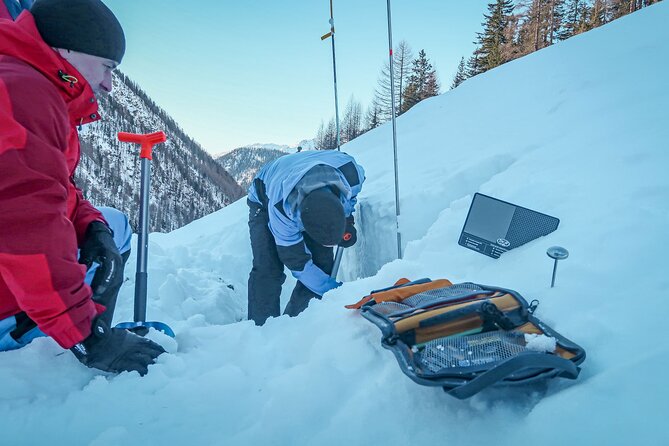
If ski touring is your dream, avalanche rescue training is the part you never want to learn too late. This workshop builds that knowledge directly into the day.
You cover avalanche rescue equipment and procedures, with hands-on practice that includes:
- Search with avalanche beacons
- Probing
- Shoveling procedures
- Correct procedures in the event of an accident
- Involvement of the mountain rescue service as part of proper response
The reason this training feels valuable is that it is not only theory. You learn the right sequence and the use of the tools. In an emergency, speed and procedure matter, and confusion is deadly.
Also, the workshop includes snowpack stability tests and snow layer understanding. That helps you shift from fear to preparation. Instead of thinking only about the rescue side, you learn to ask safer questions before travel, like how snow layers and base types can influence stability.
From the tone of the training approach, it also seems geared toward real planning. People leave with additional materials and resources for safer planning and execution of tours. That sort of follow-up is exactly what you want, because the course does not end when the van drops you back at the meeting point.
More ski days near Bled worth a look:
Where you train: Karawanks, Jesenice, and Pokljuka terrain choices
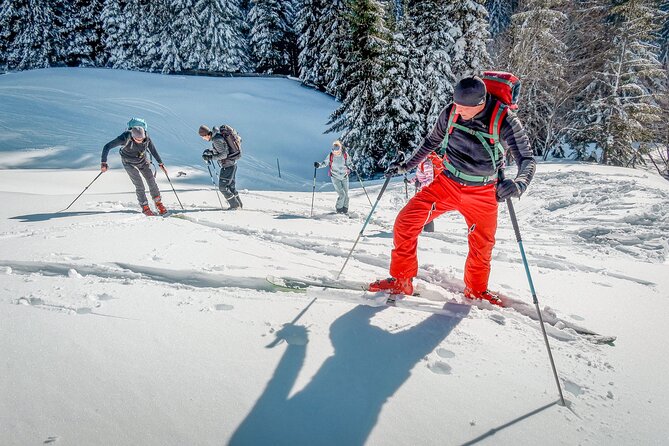
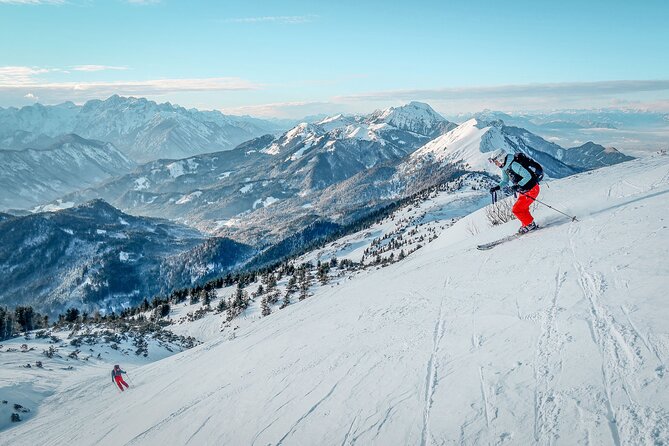
The day can run in different mountain zones based on conditions. You should expect training in either:
- Karawanks areas around the Upper Sava Valley and above Jesenice
- The Julian Alps area around Pokljuka, plus more Upper Sava Valley options
This matters because ski touring terrain is not interchangeable. Even if you are learning the same core skills, the feel changes with slope angle, snow type, and exposure. A good guide picks the field location to match the lesson, not just the view.
Flexibility also shows up when weather shifts. In past experiences with this operator, guides have adjusted the plan at the last minute, and the outcome still turned into a worthwhile summit day. That is a good sign for you as the student. You are not just paying for a schedule, you are paying for decision-making under real conditions.
If you are the type who hates uncertainty, this may bother you. But if you understand winter is dynamic, it becomes a strength. Your training stays relevant, and you learn how to respond when conditions change.
Small group coaching, English instruction, and practical attention
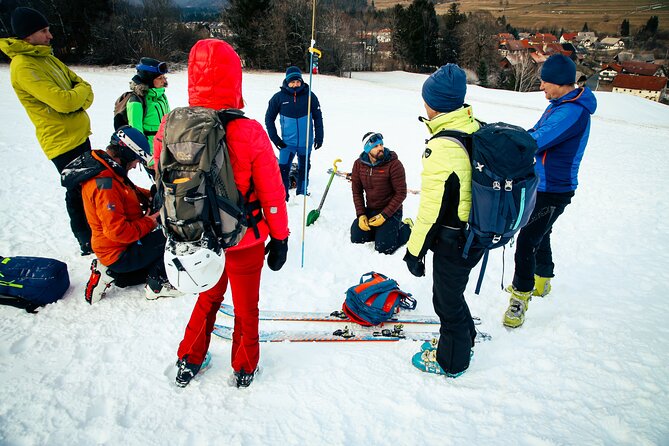
The workshop is offered in English, and the maximum group size is 6. That combination is ideal for getting real coaching without waiting your turn.
Small groups help because ski touring problems are specific. You might be fine on one slope and struggle on a slightly steeper pitch. You might be able to turn but hesitate during speed control. A guide can only fix those things if you are visible, and small groups make that possible.
The reviews also highlight guide quality by name, which is a rare nice touch for a skills course. Igor and Gregor have been specifically credited for professional organization and safe leadership during the day. That suggests the instructor team is not only teaching technique, but managing safety and pacing in a way that builds confidence.
And that confidence is a practical outcome. The course goal is not just to finish a tour. It’s to help you decide if ski touring is your sport and to make your future trips more confident. When you leave with clearer procedures, better technique references, and safety resources, you are ready to build your next steps.
Price and logistics: what your $366.71 buys
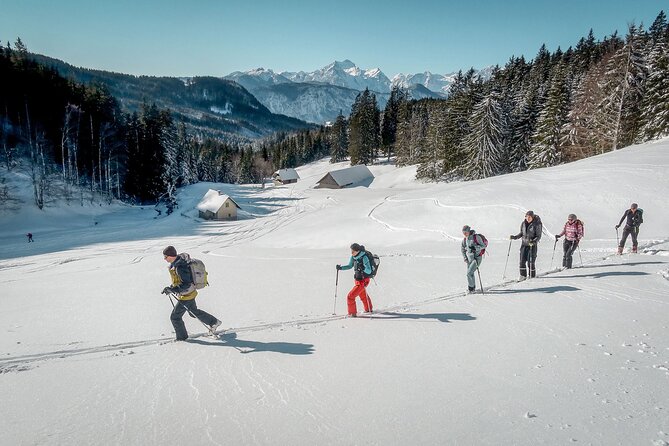
At $366.71 per person for a one-day workshop, it’s tempting to compare it to a regular ski lesson. But ski touring training is different. You’re paying for:
- Professional guiding and the guide costs
- Rental of both touring gear and avalanche rescue equipment
- Transport from Mojstrana to the training location and back, up to 200 km
- A group format with up to 6 participants
- A gift
- Mobile ticketing, plus pickup options if you choose them
The value is strongest if you do not already own the full touring setup or the avalanche rescue kit. Even if you own skis or boots, you might not have the full system, especially rescue tools used for training.
It also helps that transport is included up to a reasonable distance. You spend your day learning, not driving across the region.
Two small add-ons to plan for: food and drinks are not included, and the transport inclusion is capped at 200 km from Mojstrana.
Who should book this one-day ski touring workshop
This workshop is built for people who want structured fundamentals and safety training fast. The course says most travelers can participate, but the best fit is usually someone who:
- Wants to learn ski touring technique with real coaching
- Cares about avalanche safety and wants training, not just warnings
- Is deciding whether ski touring is a long-term hobby or goal
- Prefers small-group instruction in English
If you already ski confidently but have never toured uphill, this is a strong entry point. If you have toured before and want to tighten up snowpack thinking and rescue procedure basics, you may also get a lot from the snow layer and stability test training.
If you hate being weather flexible, keep your expectations aligned. This experience requires good weather and can be offered on a different date if canceled due to poor conditions. Winter is not predictable, and the operator adjusts.
Should you book? My take for the Bled area
I’d book this workshop if you want a single day that gives you a real framework: gear, technique, snowpack basics, and rescue procedures. It’s not just a fun day on skis. It’s a safety-and-skill day, and that combination is the rare one worth paying for.
Skip it or think twice if:
- You cannot handle weather-driven plan changes
- You expect food and drinks to be part of the price
- You want purely scenic skiing with minimal safety content
If you show up ready to learn and take winter conditions seriously, you should leave with more confidence than you arrived with, plus the kind of planning resources that actually help on your next tour.
FAQ
What language is the workshop taught in?
The workshop is offered in English.
Where does the day start, and is pickup available?
The meeting point is Savska cesta 1, 4281 Mojstrana, Slovenia. Pickup is available in a van with the agency logo if you choose pickup for a hotel or apartment.
How big is the group?
This activity has a maximum of 6 travelers.
What ski touring and safety equipment is included in the price?
The rental equipment includes skis, skins, boots, poles, ski crampons, and an avalanche kit with a beacon, probe, and shovel.
Is food and drinks included?
No. Additional food and drinks are not included.
What happens if the weather is poor?
This experience requires good weather. If it is canceled due to poor weather, you will be offered a different date or a full refund.
More 1-Day Tours in Bled
- Emerald River Tour, Triglav National Park & Soča valley Day Trip★ 4.5 · 49 reviews
- From Ljubljana: Private Bled Lake Day Trip★ 4.9 · 35 reviews
- From Zagreb: Lake Bled & Ljubljana Private Day Trip★ 5.0 · 10 reviews
- Private Day Trip: Zagreb to Ljubljana & Lake Bled★ 4.7 · 3 reviews
The newest Bled outings
- Ljubljana: Krvavec Night Sledding Adventure★ 5.0 · 1 review
- Bled: Orange Wine Tasting with Sommelier★ 5.0 · 1 review
- Mount Triglav Winter Climb★ 5.0 · 1 review
- Winter Triglav National Park Adventure – Full day trip from Bled★ 5.0 · 1 review
- Bled: Rafting and Zipline Tour★ 5.0 · 1 review
- Kranjska Gora, Bovec, Bohinj: Adventure Trip from Bled★ 5.0 · 1 review
- Vintgar gorge e-bike trip self-guided★ 5.0 · 1 review
Workshops, compared.
Ljubljana Stand-Up Paddle Boarding Lesson and Tour
Read our review →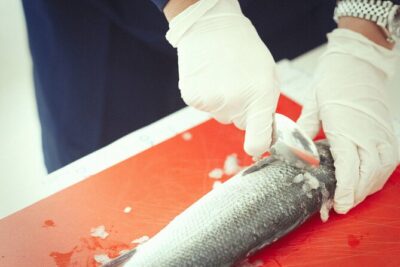
Private Mediterranean Fish Cooking Workshop with Irena
Read our review →


Browse the lists this tour appears in