
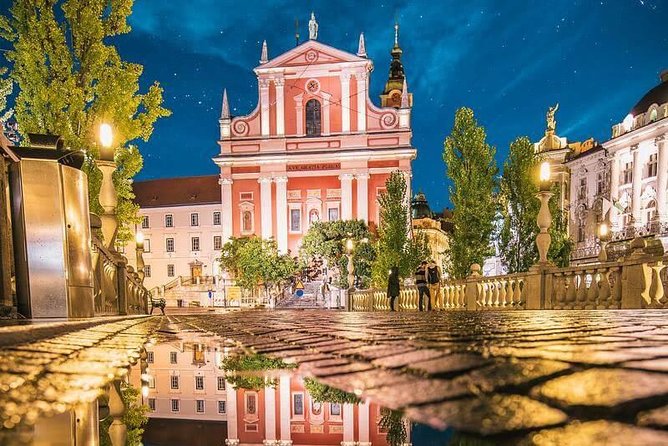
Review · CITY TOURS
Private city tour of Ljubljana. 4 hours with a friendly and fun local guide.
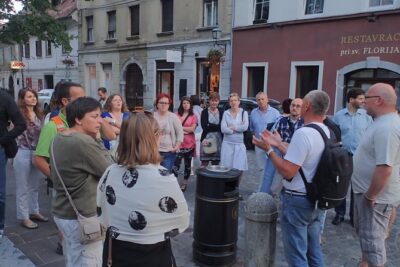
Ljubljana gets under your skin fast. In just four hours, you can cover the city core with a friendly, fun local guide and learn how all the big sights connect.
I especially like the private format for up to 15 people. You start at the Ljubljana Tourist Information Center, then walk a mostly flat, very doable route that hits the places that define the city, without feeling like you are trapped in a bus-style checklist.
Two things I really love: the architecture storytelling (think Jože Plečnik’s designs) and the way the route blends famous landmarks with a few quieter moments. The only real drawback to watch is time and ticket planning, because walking is constant and not all stops include admission, including St Nicholas’s Cathedral.
In This Review
- Quick hits before you go
- Start at TIC, then follow the city’s story
- Triple Bridge: the perfect opener for first-time Ljubljana
- St Nicholas’s Cathedral: more than a pretty façade
- The Old Town walk: squares, symbols, and street-level details
- Secession Street to Preseren Square
- Central Market and the dragon theme
- Robba’s Fountain, City Hall, and the “timelines overlap”
- National University Library, then Congress Square
- Republic Square: a visible political era
- Street of Embassies and the Serbian Orthodox Church
- Opera House, National Gallery, and Slovenska Street to Emona
- How the guides make or break this kind of tour
- Price and value: $312 per group can be a bargain or a splurge
- What to expect on the ground (and what to pack mentally)
- So, should you book it?
Quick hits before you go
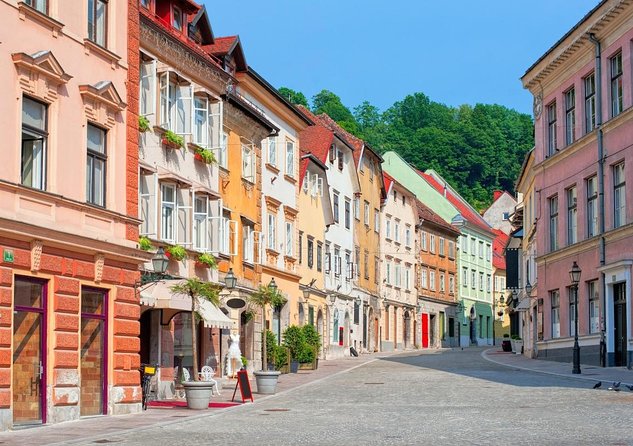
- Triple Bridge by Jože Plečnik: quick, iconic, and a great first photo moment
- Four-hour city-center loop: easy walking in a compact area, with a logical route
- Church context at St Nicholas’s Cathedral: not just looks, but how religion fits into the country
- Dragon Bridge, Central Market, and Robba’s Fountain: symbols and street-level flavor, not only monuments
- Congress Square and City Hall: big squares plus details like the 500-year-old City Hall location
- Republic Square and the Street of Embassies area: you see how different political eras left physical marks
Start at TIC, then follow the city’s story
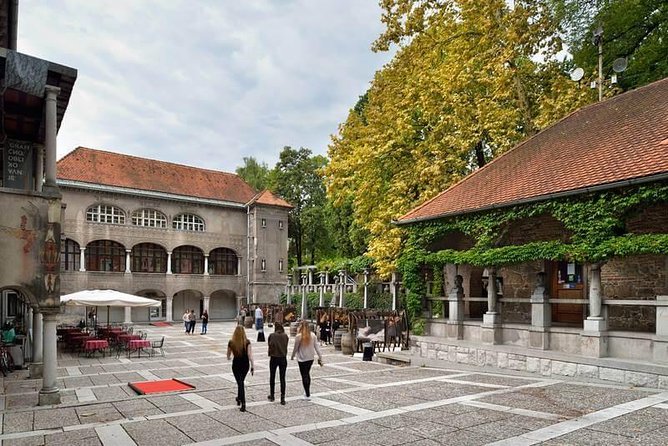
Your tour kicks off back at the Ljubljana Tourist Information Center at Adamič-Lundrovo nabrežje 2. It is a solid starting point because it is easy to find and it is near public transportation, so you are not stuck on a scavenger hunt before you even start.
From there, your guide keeps the pace steady for about four hours. Ljubljana is famously walkable and mostly flat, so the route works well for people who want to see a lot without constant stairs or big climbs. That said, four hours is still four hours, and one thing I’d plan for is a quick break if weather or energy levels demand it.
You are also not limited to a rigid script. Since this is a private tour, the guide can shape the walk around your group’s questions and interests. In past tours tied to this experience, guides like Urban, Primož, Matej, and Tina came through in the feedback as friendly, funny, and willing to adjust. You cannot guarantee a specific guide, but you can reasonably expect a lively, talk-through-the-city style.
More Private Tours in Ljubljana
- Ljubljana: Private Guided City Tour
★ 4.8 · 180 reviews - Ljubljana private walking tour with a local
★ 5.0 · 140 reviews - From Ljubljana: Triglav National Park Tour (Private)
★ 4.9 · 78 reviews
Triple Bridge: the perfect opener for first-time Ljubljana
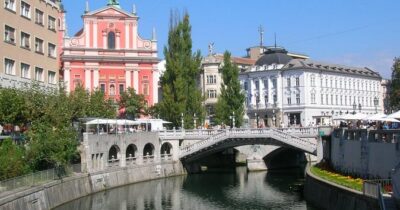
The first stop is Tromostovje, the Triple Bridge. The key detail here is the architect: it was created by Jože Plečnik, who is strongly associated with Ljubljana and credited as one of Europe’s well-known architects.
Crossing the bridge is simple, and the best part is how quickly it gives you a sense of the city’s rhythm. You get water, views, and a landmark that is instantly recognizable, even if you have only skimmed photos back home. Since the admission ticket is listed as free for this stop, you can treat it as a straightforward win, no extra planning needed.
One small practical point: bring your camera early. The Triple Bridge is a classic shot, but the light and angles can change quickly as you walk, so it pays to be ready for the first good moment.
St Nicholas’s Cathedral: more than a pretty façade
Next, you stand in front of St Nicholas’s Cathedral. This stop is about interpretation as much as architecture. Your local guide explains the role of religion and the Church as an institution in the country, which is useful if you want Ljubljana in context rather than as a set of pretty buildings.
Admission for this specific stop is listed as not included. That matters because you might see the cathedral from the outside as part of the tour without paying extra on the spot, but if you plan to go inside, you should expect to handle that separately.
I like stops like this because they answer the question Why does this city look the way it does? You get a clearer sense of how history and beliefs influenced public spaces.
The Old Town walk: squares, symbols, and street-level details
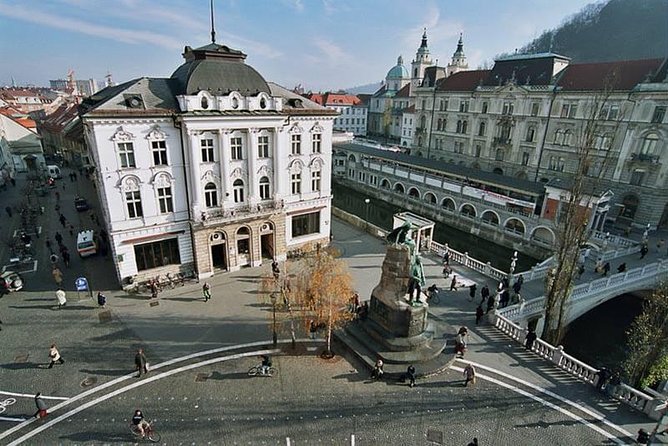
The heart of the experience is the four-hour walking loop through Ljubljana’s old-town spine. Your tour is designed to keep you moving through the city center and mostly in pedestrian areas, so you spend your time seeing rather than waiting.
Here is the backbone of the route and why it works:
Secession Street to Preseren Square
You start by admiring colorful buildings on Secession Street. Then you head toward Preseren Square, one of the city’s most important landmarks, named after Slovenia’s national poet France Prešeren.
What I like about this part is the human story angle. The tour focuses on Prešeren’s life and his unheard love in a Europe that was heading toward major change. That kind of background turns a square from a stop into a place.
More Ljubljana tours and day trips worth a look:
Central Market and the dragon theme
From Preseren Square, you move toward the Central Market. This is where you can absorb day-to-day Ljubljana. You will see bustling stalls with local produce and colorful flowers, which makes the city feel lived-in rather than museum-like.
Then comes Dragon’s Bridge. The tour pauses here specifically to explain Ljubljana’s symbol, a dragon, which is one of those clever city branding elements that locals actually use and talk about.
If you want a quick way to understand Ljubljana’s identity, these symbol moments help. You start noticing patterns, not just isolated photos.
Robba’s Fountain, City Hall, and the “timelines overlap”
You pass Robba’s Fountain, then enter the story around City Hall, which is noted as sitting at the same place for more than 500 years. That single detail helps you understand the layering in Ljubljana. Even when the city changes politically, some of the physical anchor points remain.
And your guide weaves it all together while you stroll through cobbled streets lined with restaurants and cafés. This is where the city’s vibe kicks in, because you are not just looking at sights, you are walking through spaces where people actually eat and hang out.
National University Library, then Congress Square
As you continue, you pass the National University Library and reach Congress Square, described as Ljubljana’s most representative square. Here you learn history and you also get your orientation on major buildings around the square, including the University of Ljubljana and the Philharmonic Academy.
I like Congress Square in a guided format because it is a big-open space that can feel generic if you are only using your eyes. With a guide’s commentary, you see how the square’s role and surrounding architecture connect to the city’s broader story.
Republic Square: a visible political era
Next is Republic Square. You see the Slovenian National Parliament and surrounding statues, with an explanation of architectural style linked to the communist era.
This is another stop I value because it helps you read the city like a document. Ljubljana is not only postcard charm. It also reflects political shifts through built form, and you get the quick guide version of that story without needing a textbook.
Street of Embassies and the Serbian Orthodox Church
You then walk toward the Street of Embassies, where bourgeois villas now house powerful countries of the world. It is a small twist that makes the area feel diplomatic, even though you are still in a normal walking zone.
After that, you stop to see the Serbian Orthodox Church facing Ljubljana’s grand park Tivoli. That pairing matters because it gives you another layer of context: not only what the city looks like, but how different communities and institutions show up in the same urban canvas.
Opera House, National Gallery, and Slovenska Street to Emona
You pass the Opera house, and you also pass the National Gallery, recently renovated. Then you continue along Slovenska Street, once the main road that led to Roman town Emona, established about 2000 years ago.
This part can feel like a time jump, but that is exactly the point. Ljubljana has a rare talent for making history feel close. You are walking past symbols of each era, and your guide connects them so it does not become a random list of dates.
Finally, you complete the circle by coming back to Preseren Square. You end up back where you started the city story, and that loop is a smart way to get your bearings for the rest of your trip.
How the guides make or break this kind of tour
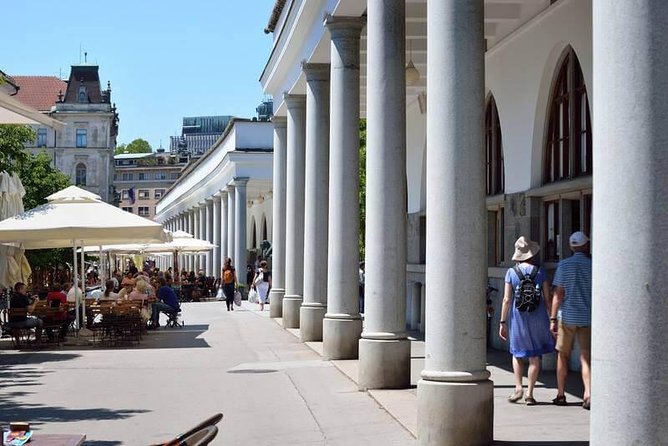
A city walking tour lives or dies on the guide’s voice, pacing, and personality. This experience is designed for that, and the feedback includes a clear theme: guides are friendly, funny, and story-forward.
Some names showing up include Urban, Primož, Matej, Matt, Tina, and others. The common thread is that guides mix architecture with humor and answer questions without making it feel like an exam. One of the feedback highlights also points out that the walk keeps you mostly in the pedestrian or sightseeing zones, which is a big deal when you want convenience and flow.
If you are traveling with teens or young adults, this style is often a good match. The route gives them enough “scene changes” to stay engaged, and the guide’s jokes and facts can turn boring stretches into worth-it moments.
Price and value: $312 per group can be a bargain or a splurge
The price is listed as $312.06 per group, up to 15 people, for around four hours. That structure is what makes the value swing depending on your group size.
If you travel with a full group near the 15-person limit, the per-person cost drops a lot. If you are a small party, it rises fast, and one piece of feedback includes a complaint about value when the tour cost felt high relative to expectations.
So here is the practical way to think about it:
- If you can group up with friends or family, this can be great value.
- If you are just one or two people, consider what you want from a private guide: is it worth paying for personalized pacing and nonstop commentary?
- Also remember that admission tickets are not generally included for every stop. For example, St Nicholas’s Cathedral is listed as not included, even though the exterior viewing is part of the tour.
For me, the deal-breaker is usually whether you want a “guided narrative” tour. If yes, four hours of curated city context around key squares and symbols is a solid use of limited time.
What to expect on the ground (and what to pack mentally)
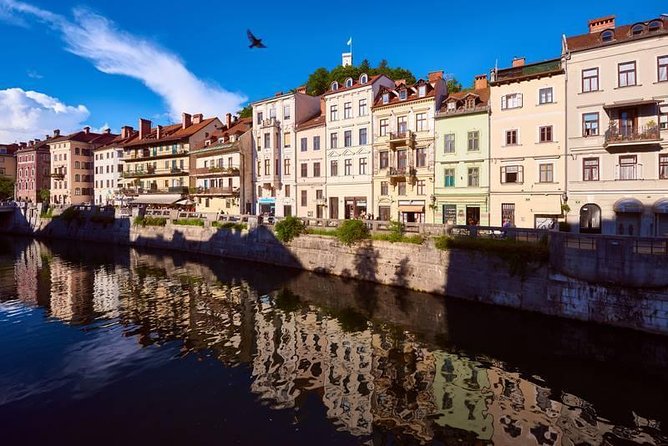
This tour is set up as a private walk with a local guide, lasting about four hours. The walking is described as easy because Ljubljana is mostly flat and very walkable. Still, you should plan like it is a city hike in light form, not a sit-down lecture.
A few practical thoughts:
- Wear comfortable shoes. Four hours of cobblestones and old streets adds up.
- Bring water and a light layer if weather shifts.
- If you care about interior access, budget for admissions that are not included, especially since St Nicholas’s Cathedral is specifically not included.
- If you want extra views, the tour notes that you might visit the castle in your free time. Plan that as a separate add-on rather than assuming it is automatically covered.
And if you hit weather that slows you down, it is smart to build in small pause moments. One piece of feedback mentioned that walking for hours without a pause can feel tough in rough weather, even if the city is walkable.
So, should you book it?
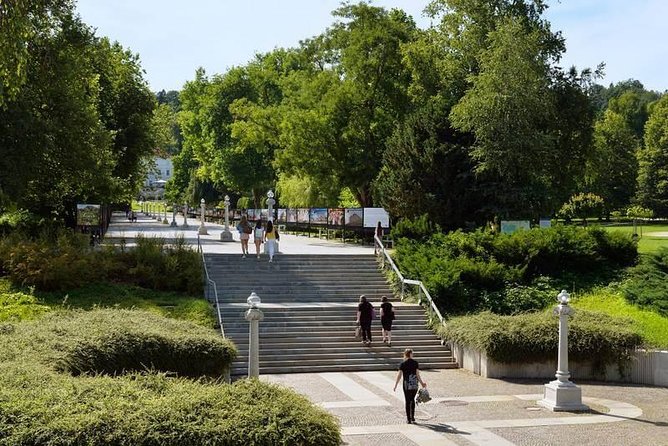
I’d book this private Ljubljana tour if you want a fast, friendly orientation that connects landmarks to the city’s identity. It is especially worth it when you want architecture stories, clear context, and a loop route that helps you navigate later on your own.
Hold off or book with eyes open if:
- You are traveling in a very small group and the per-person cost feels steep.
- You mainly want free, self-guided photo stops and you are not interested in the guide’s explanations.
- You expect every stop to include admission, because some are clearly not included.
If you like walking, you want the major sights plus a few symbols and street-level moments, and you enjoy a local personality guiding the pace, this tour is a strong first move for Ljubljana.
The newest Ljubljana outings
- Transfer from Ljubljana to Salzburg or Vice Versa★ 5.0 · 1 review
- Explore the Instaworthy Spots of Ljubljana with a Local★ 5.0 · 1 review
- Tito’s Socialist Ljubljana Private Tour★ 5.0 · 1 review
- Soca valley | Private trip from Ljubljana★ 5.0 · 1 review
- Soča River Valley, Kranjska Gora & Lake Jasna Day Tour★ 5.0 · 1 review
- Private Tour in Kamnik – Mammoth – Farmhouse and Organic Farm★ 5.0 · 1 review
- Photo Tour: Ljubljana City of Lights★ 5.0 · 1 review
City Tours, compared.

Škocjan Caves and the city of Piran from Ljubljana
Read our review →
Ljubljana by E-Bike: Guided City Highlights Tour
Read our review →
Private transfer Ljubljana Airport from & to Ljubljana City
Read our review →
Browse the lists this tour appears in