
Review · WALKING TOURS
Šmartno: Village Walking Tour with Local Guide
Šmartno is history you can spot from street level. I like the way this short walk ties Roman-era context to the village’s fortress skyline, then brings it down to daily life inside a furnished home. Two things I especially love are the focus on Šmartno’s fortress towers and the chance to meet the past through Kolon’s everyday routines, not just dates and names.
One thing to consider: it is only 1 hour, so if you want lots of free time to wander off-script, you may feel a little rushed. Still, the guide’s pacing is built for maximum storytelling, photos, and key stops without wasting your time.
In This Review
- Key Things to Know Before You Go
- A Fortified Village That Reads Like a Story
- Meeting Point at the Big Round Tower
- From Roman Times to the Fortress Skyline
- Tower Hunt: Finding 7 Fort Moves in 1 Hour
- Kolon’s Fully Furnished House: Daily Life, Not Museum Furniture
- The 1960s Brda Movie Stop You Might Not Expect
- Gase Alleyways: Tight Streets, Great Angles, Real Atmosphere
- Why the Roofs, the Shapes, and the Houses Matter
- Church of St. Martin: A Raised Stage With Stories Attached
- Tone Kralj Paintings: Bright Colors With Hidden Meaning
- Instagram Spots, But With a Story Behind Them
- Price and Value for a 1-Hour Private Tour
- Who This Tour Suits Best
- Should You Book This Šmartno Walking Tour?
- FAQ
- How long is the Šmartno village walking tour?
- What is the meeting point for the tour?
- Is the tour in English?
- Is this a private group tour?
- How much does the tour cost?
- What is included in the price?
- What is not included?
- Can I cancel for a full refund?
- Can I reserve and pay later?
Key Things to Know Before You Go
- 7 fortress towers, with a clear “you can see 5” tip to help you hunt for them fast
- Kolon’s fully furnished house (around the 1850s) including a wine cellar, kitchen, and bedroom with a balcony
- A 10-minute Brda film from the 1960s, paired with live commentary
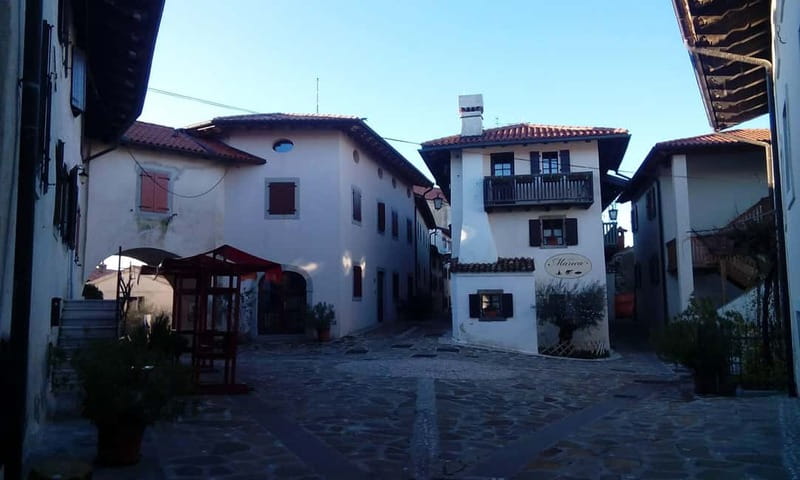
- The village alley network called gase, great for quick turns, angles, and photos
- Church of St. Martin plus Tone Kralj paintings, with meanings explained instead of left vague
A Fortified Village That Reads Like a Story
Šmartno sits in Central Slovenia, in the Goriška Brda region, where hills and villages feel designed for slow strolling. This tour works because it treats the village like a living timeline. You move from the big picture, like why a fortress was built and how people defended it, to the small details of how a family lived day to day.
I like that the walk is not only about what you see. It also focuses on what those features meant to the people who lived here, from Roman times onward. You end up understanding the skyline instead of just taking it in.
More Walking Tours in Ljubljana
- Ljubljana: Guided Walk & Funicular Ride to Ljubljana Castle
★ 4.6 · 576 reviews - Ljubljana: Slovenian Cuisine Walking Tour with Tastings
★ 4.8 · 472 reviews - Ljubljana: 2h walking tour with local guide
★ 4.7 · 433 reviews
Meeting Point at the Big Round Tower
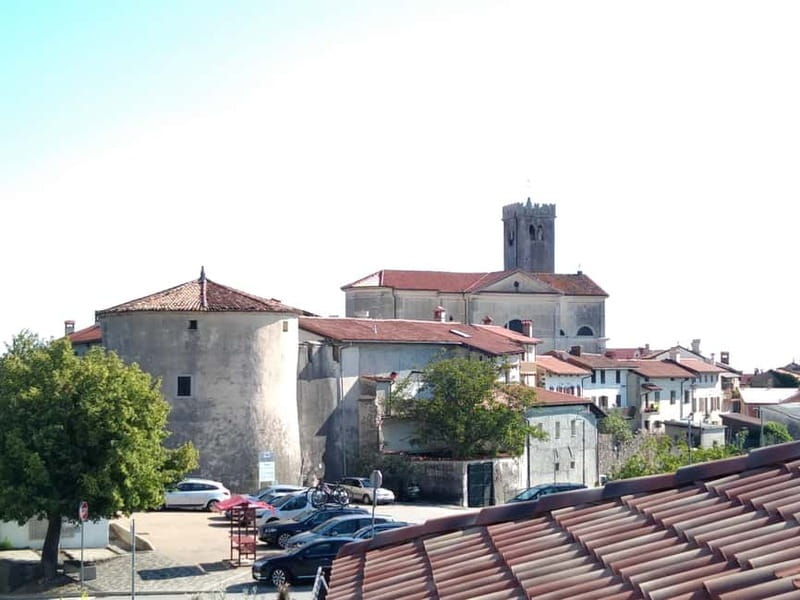
You’ll meet at the big round tower, by the village map and before the entrance, near the parking lot. That matters more than you might think, because Šmartno’s layout can feel maze-like once you start moving through the alleys. Starting at the fortress landmark helps you orient quickly.
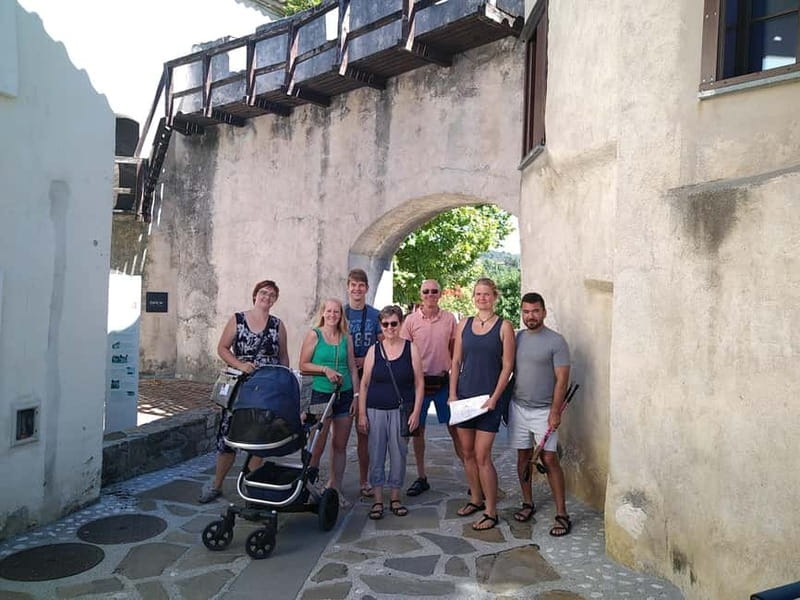
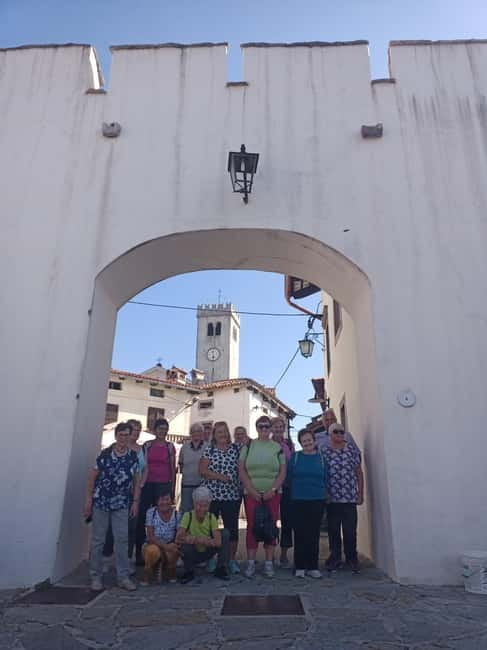
This is a private group tour with an English live guide, and it runs about 1 hour. Private group means you can follow the flow without being swept along in a crowd, and it also helps with photo stops in tight spaces like the gase alleyways.
From Roman Times to the Fortress Skyline
A big chunk of the tour is the “why” behind Šmartno. You’ll hear how the region’s story runs from Roman times up through the reasons people built the fortress that defines the village skyline even centuries later.
You get answers to practical questions the village forces on you when you look up: who built it, why it was built, and who defended it. The guide also explains how defenders lived and what that would have felt like, which makes the walls and towers feel less like scenery.
This section is also where the tour turns from casual walking to actual understanding. Once you know what the fortress was meant to do, the village streets feel planned, not random.
Tower Hunt: Finding 7 Fort Moves in 1 Hour
The tour’s most fun “mission” is the search for the 7 fortress towers. You are not just told they exist, you are guided to places where they shape views and angles.
Here’s the key planning detail: you can see 5 towers from Šmartno, and 1 tower is not accessible during the tour. Knowing that up front prevents the common frustration of thinking you missed something, especially if you’re filming or doing quick Instagram photos.
You’ll also get help with “where to stand” without turning the tour into a photo workshop. That balance is smart for a one-hour format. You get the shots, but the story stays the main event.
Kolon’s Fully Furnished House: Daily Life, Not Museum Furniture
Then the tour shifts from stone and strategy to home life. You’ll visit a fully furnished house of kolon, a typical farmer from around the 1850s. This is one of the stops that makes Šmartno feel real, because you can see how a family’s routine would have worked inside the space.
The tour highlights a (wine) cellar, the kitchen, and a bedroom with a balcony and views over the rolling hills. Even if you are not a history buff, these rooms make it easy to imagine seasons, chores, and family rhythms.
I like that the guide talks about daily life while you move room to room. Instead of treating the house like a static exhibit, the tour connects the layout to how people lived and worked.
Elsewhere around Ljubljana, on the same day out:
The 1960s Brda Movie Stop You Might Not Expect
At some point you’ll watch a 10-minute movie about Brda from the 1960s, with live commentary from your guide. This is the kind of stop that breaks up a walking-heavy experience with context you cannot easily see from outside.
The value here is time travel. Earlier you’re learning about the fortress and the village’s older structures, then the film puts you closer to modern memory. It helps you understand how the region looked and felt when it was closer to living memory, not just recorded history.
If you worry that a film will slow you down, note that it is short at 10 minutes and guided. It stays functional, not filler.
Gase Alleyways: Tight Streets, Great Angles, Real Atmosphere
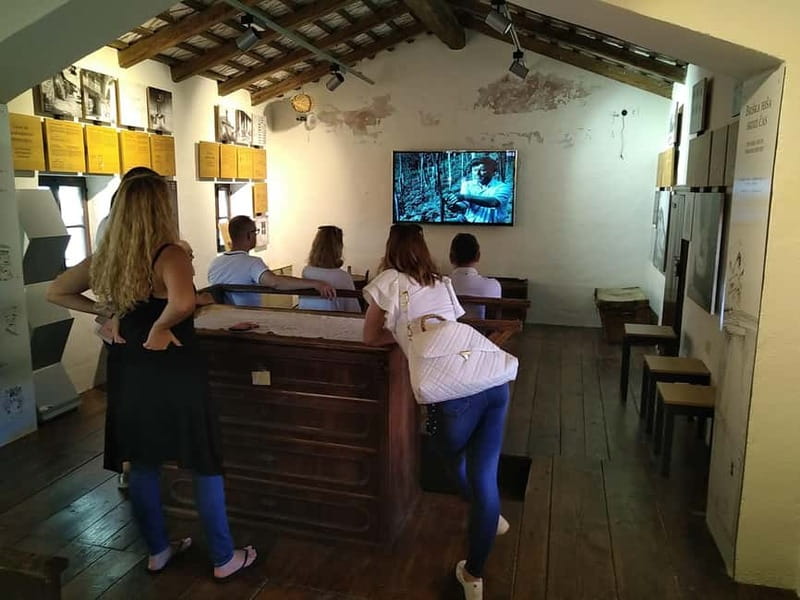
Now you move through the village’s narrow alleyways called gase. The name tells you what to expect: close passageways where walls feel close and turns come fast.
This part of the walk is where you get a lot of practical travel rewards. The alleys create natural photo frames, and they also make it easy to feel the village scale. In small spaces, the guide’s explanations land better, too, because you’re not imagining where things are. You are standing next to them.
You’ll also see charming houses and learn about smart building methods. The tour points out design choices like why roofs are not steep and what those geometric shapes under the roofs are doing. You are not left guessing with photos only.
Why the Roofs, the Shapes, and the Houses Matter
Architecture can turn into trivia fast. Here, the tour uses details to explain how people adapted to local needs. You’ll look at roofs that are not steep, and you’ll learn about the geometric features beneath the rooflines.
Even if you do not take a single measurement, understanding these design choices changes how you read the village. You stop seeing random features and start seeing logic, climate comfort, and everyday practicality.
And yes, this stop is also good for selfies. Not because it is staged, but because the village design makes great frames without you hunting for them.
Church of St. Martin: A Raised Stage With Stories Attached
The Church of St. Martin sits on a raised level above the village, and the tour explains why that mattered. This is not just a viewpoint stop. The guide connects the location to how the area worked in the past and what happened there before the largest church in the region was built in the 18th century.
You’ll hear what made the building process special when the bigger church went up. The goal is to give you a sense that sacred buildings were often built with intention, power, and community needs behind them, not just religious devotion.
If you like walking tours that give you a reason for every step, this is one of the best parts. The rise changes your sightlines, and the story gives those changes meaning.
Tone Kralj Paintings: Bright Colors With Hidden Meaning
Inside the church area, you’ll see Tone Kralj’s paintings and learn about the hidden meaning behind some of them. The key is that the guide does not treat them like decorative wall art.
Instead, you get interpretations that make the images feel like messages. That matters for two reasons. First, it turns a quick look into something you actually remember. Second, it makes the church stop feel connected to the fortress and village life, not like a random detour.
Instagram Spots, But With a Story Behind Them
This tour clearly has photo-friendly moments, including places you can use for strong selfies. But the difference is that you’re not just chasing “pretty.” You’re learning why those locations are important, which gives your pictures context.
The tower views and the church viewpoint help you capture the skyline and the village layout. The alleys and rooftops give you tight compositions that look good even with quick shots.
If you plan ahead, you can do a photo rhythm that keeps the tour smooth: shoot, listen, then move. The pace works best when you stay present instead of trying to capture everything at once.
Price and Value for a 1-Hour Private Tour
The price is $41 per group, up to 5 people, for a 1-hour tour. That makes the cost feel small if you’re traveling with friends or family. It also makes it feel reasonable if you want a guide-led route and explanations without doing a full half-day excursion.
The tour includes the guided walk of Šmartno, with the English live guide. What it does not include is shopping for souvenirs or local products in shops, so plan to treat this as a history and village-experience hour, not a market run.
Value here is about focus. In one hour you get fortress context, a home-life interior visit, a short film, and a church and art interpretation. If you try to do that on your own, you would likely spend a lot more time figuring out what matters and where to stand for the best views.
Who This Tour Suits Best
This experience fits you if you like:
- short, high-impact walks with clear stops
- fortress villages and architecture details like towers and rooftops
- understanding daily life through a furnished home, not just ruins
- photo moments that come with explanations
It may be less ideal if you want long free time wandering, shopping stops, or a tour that feels like a museum deep dive.
Also, it is especially good if you enjoy guides who bring energy to the story. The English guide on this tour, Irena (IrMa tours), is highlighted in past bookings for making history feel alive and for tying Roman-to-present details into a single narrative you can walk through.
Should You Book This Šmartno Walking Tour?
I think you should book it if you want a guided route that makes Šmartno instantly understandable, even in just an hour. The combination of fortress tower hunting, Kolon’s furnished home, the short Brda film, and the church art explanations is a rare mix of big-picture and everyday detail.
If you are visiting Goriška Brda and want one focused experience that delivers photos, context, and local flavor without dragging on, this is a strong choice. Just go in with the expectation that it is a compact visit, so arrive ready to walk, listen, and grab your best angles along the way.
FAQ
How long is the Šmartno village walking tour?
The tour lasts about 1 hour.
What is the meeting point for the tour?
You meet by the big round tower and the map of the village, before the entrance, by the parking lot.
Is the tour in English?
Yes, the live tour guide speaks English.
Is this a private group tour?
Yes, it is a private group.
How much does the tour cost?
It costs $41 per group, up to 5 people.
What is included in the price?
The price includes a tour of Šmartno with a local guide.
What is not included?
Shopping for souvenirs or local products in local shops is not included.
Can I cancel for a full refund?
You can cancel up to 24 hours in advance for a full refund.
Can I reserve and pay later?
Yes, you can reserve now and pay later.
The newest Ljubljana outings
- Transfer from Ljubljana to Salzburg or Vice Versa★ 5.0 · 1 review
- Explore the Instaworthy Spots of Ljubljana with a Local★ 5.0 · 1 review
- Tito’s Socialist Ljubljana Private Tour★ 5.0 · 1 review
- Soca valley | Private trip from Ljubljana★ 5.0 · 1 review
- Soča River Valley, Kranjska Gora & Lake Jasna Day Tour★ 5.0 · 1 review
- Private Tour in Kamnik – Mammoth – Farmhouse and Organic Farm★ 5.0 · 1 review
- Photo Tour: Ljubljana City of Lights★ 5.0 · 1 review
Walking Tours, compared.
Guided Walk & Funicular Ride to Ljubljana Castle
Read our review →

Piran Walking Tour with Local Wine and Food Tasting
Read our review →
Ljubljana 2Hours and 30Minute Walking Tour with Local Guide
Read our review →Browse the lists this tour appears in